
How Lab Interpretive Reports Provide Therapeutic Guidance for Better Patient Outcomes in 2025
- Choice PharmD Reports Team
- Sep 19, 2025
- 3 min read
Updated: Sep 20, 2025
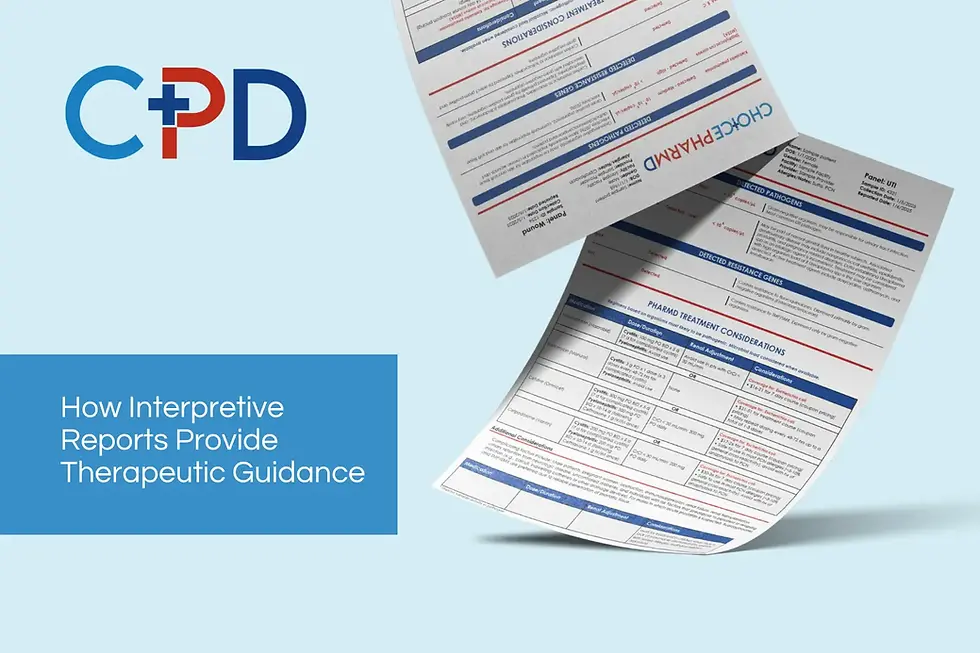
Interpretive reports (e.g. PharmD reports) of molecular diagnostic tests deliver critical therapeutic guidance by supplementing the results with pathogen explanations, antimicrobial stewardship insights, and evidence-based treatment considerations. These reports help clinicians interpret complex diagnostic data, choose effective therapies, and prescribe responsibly. At Choice PharmD, each interpretive report is reviewed by a clinical pharmacist, providing therapeutic guidance for best treatment options based on detected pathogens and resistance genes. With individualized pharmacist review, medication pricing guidance, and immediate pharmacist access, Choice PharmD Reports ensure faster, safer, and more patient-centered care in 2025.
Why Interpretive Reports Matter
The healthcare landscape is increasingly complex. Providers face:
Rising antimicrobial resistance that makes prescribing decisions more difficult.
Overwhelming diagnostic data from molecular and genetic testing.
Growing need for stewardship programs to reduce misuse of antibiotics.
Patient demand for faster, more affordable care.
Choice PharmD Reports bridge this gap by offering:
Clinical interpretation – Explaining detected pathogens and resistance genes in a clear, provider-friendly way.
Evidence-based guidance – Aligning with the latest clinical practice guidelines and literature.
Individualized review – Each report is reviewed by a clinical pharmacist for accuracy.
Medication affordability insights – Including pricing comparisons and coupon availability.
Real-time access to pharmacists – A QR code is available for providers to chat with a pharmacist or speak to a pharmacist directly via phone call.
This means physicians and labs can make smarter, faster, and safer treatment decisions, reducing risk while improving patient outcomes.
How Choice PharmD Reports Work
Lab Testing Performed
Molecular diagnostic (PCR) testing identifies pathogens and resistance genes.
Data Integration with LIS
Test results are transmitted from Laboratory Information System (LIS) to Choice PharmD via HL7 interface, ensuring fast, seamless, and accurate data transmission.
Interpretation of Results
Clinical pharmacist reviews test results and patient-specific considerations
Provides an explanation of detected pathogens and resistance genes, aiding providers in clinical interpretation of results.
Evidence-Based Treatment Considerations
Pharmacist references clinical guidelines, primary literature, and antimicrobial susceptibility data.
Safe and effective treatment regimens are suggested.
Medication Pricing Included
Cost-effective therapy options with coupon insights are displayed for providers and patients.
Clinician Review
A pharmacist validates each report, providing best treatment options based on detected pathogens, resistance genes, and patient-specific factors..
Immediate Access for Providers
A QR code is available for providers to connect directly with a pharmacist for any additional questions.
Example:
Patient’s UTI test detects E. coli, K. pneumoniae, and S. epidermidis with resistance genes.
PharmD Report explains clinical relevance of each pathogen in relation to the panel. Additionally, resistance genes are explained, describing types of organisms and medications affected.
Choice PharmD Report provides appropriate antibiotic(s) with dosing, renal adjustments (if warranted), and any additional considerations.
Provider views treatment options, including online coupon pricing for cost analysis. The medication best fit for the patient selected by the provider.
Patients receive faster, more effective care with reduced trial-and-error.
Fresh Stats: Why Interpretive Reports Are Essential in 2025
Antimicrobial resistance (AMR): By 2050, drug-resistant infections could cause 10 million deaths annually if not controlled (WHO, 2024).
Misuse of antibiotics: Up to 50% of antibiotics prescribed in the U.S. are unnecessary or inappropriate (CDC, 2024).
Healthcare costs: AMR infections add $20 billion annually to U.S. healthcare costs (CDC).
Turnaround time: LIS-integrated PharmD Reports reduce diagnostic-to-treatment delays by up to 40%, improving recovery speed.
Patient trust: 76% of patients report higher satisfaction when providers explain lab results in simple, actionable terms (Journal of Patient Experience, 2024).
Choice PharmD Reports directly address these challenges by combining clinical interpretation, stewardship, and cost-conscious care into one solution.
Summary
Choice PharmD Reports are more than a supplemental tool for labs—they are a clinical decision-making tool that enhances accuracy, speeds up care, and supports antimicrobial stewardship. With evidence-based guidance, individualized review, and real-time pharmacist access, providers can deliver safer, more effective, and affordable treatments.
Ready to enhance your lab’s diagnostic value? Contact Choice PharmD today to schedule a complimentary demo to see how integrating PharmD Reports into your workflow can elevate patient care.
FAQs: PharmD Reports and Therapeutic Guidance
1. What makes PharmD Reports different from standard lab results?
Standard lab reports only display raw results. PharmD Reports go in depth—providing clinical interpretation, guideline-based treatment options, resistance explanations, and cost insights.
2. Who reviews PharmD Reports before delivery?
Each report is reviewed by a licensed clinical pharmacist (PharmD) to ensure accuracy and provide best treatment options based on detected pathogens and resistance genes.
3. How do PharmD Reports help reduce antibiotic resistance?
By promoting proper antimicrobial stewardship—ensuring patients receive the right drug, at the right dose, for the right duration—PharmD Reports help minimize unnecessary or incorrect prescriptions.
4. Can providers contact a pharmacist directly through the report?
Yes. Each report includes a QR code or phone number for immediate pharmacist consultation, streamlining communication.
5. Are PharmD Reports customizable for labs?
Yes. Reports can be branded with lab logos and tailored color schemes for seamless integration into existing systems.


Comments